Source home bra laundry bag for Storage, Washing, and Travel
Compare 30 listings for the home bra laundry bag from verified suppliers in China. Buyers can evaluate materials like polyester, sizes, and customization options to find the right storage solution for delicate items.
Key considerations
Products List
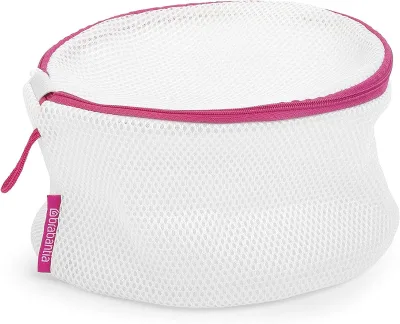
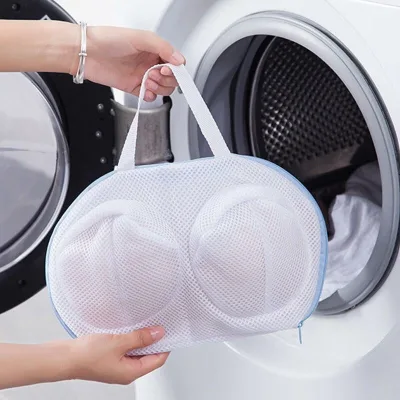






Comprehensive Sourcing Guide
Strategic Sourcing Guide for Home Bra Laundry Bags
Understanding Product Specifications and Material Composition
When sourcing a home bra laundry bag, the primary objective is to identify a product that balances delicate fabric protection with structural durability. Based on the available market data, the core material composition for these items is predominantly polyester. This synthetic fiber is selected for its resistance to tearing and its ability to maintain shape during the agitation of a washing machine cycle. The observed product attributes indicate a specific focus on "thickening" features, which suggests that the fabric density is a critical differentiator. Buyers should verify that the material is not merely a thin mesh but possesses a weight and weave structure capable of withstanding the weight of wet garments without stretching or tearing.
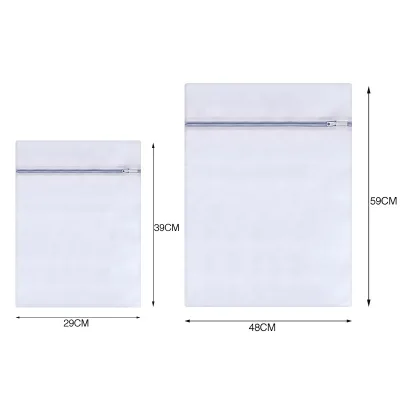
The dimensional specifications found in the current market data present a significant variance that requires careful scrutiny. One observed specification lists a size of 19.5 x 13 x 5.5 cm, while another entry notes a size of 19 x 39 cm. This discrepancy highlights the necessity for buyers to define their exact requirements regarding capacity. A bag measuring 19.5 x 13 x 5.5 cm is likely designed for single-item storage or very small loads, whereas a 19 x 39 cm dimension suggests a larger capacity suitable for multiple bras or mixed lingerie. Furthermore, the "Single package size" is recorded as 20 x 20 x 20 cm, which implies a cubic packaging format that may be optimized for shipping efficiency but does not necessarily reflect the unfolded dimensions of the bag itself.
The physical characteristics of the product also include specific design elements such as a "rectangle" shape and a "modern" or "contemporary and contracted" style. These aesthetic and functional attributes indicate that the product is intended for home use, specifically within bathrooms or behind doors. The "applicable space" is explicitly noted as "Bathroom, Behind Doors/On Walls," suggesting that some units may feature hanging mechanisms or wall-mounting capabilities in addition to their function as a washing bag. Buyers must confirm whether the product is strictly a washing accessory or a dual-purpose storage and washing solution. The "fabric type" is consistently listed as polyester, but the "thickness" is variably described as "10 silk" in some contexts, a term that may refer to a specific thread count or a marketing descriptor rather than a literal silk composition, given the primary material is polyester.
Compliance, Certification, and Safety Standards
In the B2B procurement of textile products like laundry bags, compliance and certification are often the most overlooked yet critical aspects of the supply chain. While the provided data does not explicitly list specific certification bodies or test results, buyers must proactively verify that the polyester material used meets international safety standards for textiles. This includes checking for the absence of harmful substances such as azo dyes, formaldehyde, or heavy metals, which can be present in the dyeing process of synthetic fabrics.
The "place of origin" for these products is identified as both Zhejiang and Guangdong, China. These regions are major manufacturing hubs, but the regulatory environment can vary between provinces. Buyers should request documentation confirming that the manufacturing facilities adhere to local environmental regulations and labor standards. Additionally, since the product is intended for use in home environments, particularly in bathrooms, the material should be resistant to mold and mildew, especially if the bag is left damp. The "season" attribute is listed as "All-Season," which implies the product is designed for year-round use, further necessitating robust material properties that do not degrade in humid conditions.
Regarding certifications, buyers should inquire about ISO 9001 for quality management systems and OEKO-TEX Standard 100 for textile safety. Although the data mentions "OEM/ODM: Yes!" and "Accept Customized Logo," it does not confirm any specific third-party testing. Therefore, the procurement strategy must include a requirement for the supplier to provide recent test reports for the specific batch of polyester fabric being supplied. This is essential to ensure that the "Reusable" and "Durable" claims are substantiated by actual performance data rather than marketing assertions.
Cost Drivers and Pricing Dynamics
The pricing landscape for home bra laundry bags is influenced by several key variables, including material quality, customization levels, and order volume. The observed price range in the market is between 0.1 and 8 USD. This wide disparity suggests that the lower end of the spectrum likely corresponds to basic, non-customized units with standard polyester mesh, while the higher end may reflect premium thickening, custom branding, or specialized packaging.
The Minimum Order Quantity (MOQ) is a significant cost driver. The data presents a conflicting range, with one entry stating an MOQ of 2000 pieces and another listing an MOQ of 30 pieces. This variance indicates that suppliers may have different tiers for standard versus custom orders. For a buyer seeking a custom logo or specific dimensions, the MOQ of 2000 pieces is a realistic expectation. Conversely, for trial orders or small-batch testing, the lower MOQ of 30 pieces may be available, though potentially at a higher unit cost.
Sample lead times are another factor affecting the overall cost structure. The observed sample time is 5-7 days, which is relatively efficient. However, buyers should account for the cost of shipping samples and the potential need for multiple iterations to achieve the desired quality. The "Single gross weight" varies significantly, with entries of 1.000 kg and 0.0 kg. This inconsistency suggests that the weight data may include packaging or be a placeholder. For logistics planning, buyers must request the actual net weight and volume of the product to calculate accurate freight costs. The "Package" is listed as "One Poly Bag" or "OPP," which are standard, low-cost packaging options, but custom packaging will increase the unit price.
Typical Applications and Functional Design
The functional design of the home bra laundry bag extends beyond simple containment. The primary application is the protection of delicate lingerie during the wash cycle. The "Reusable" and "Durable" features are critical here, as the bag must withstand repeated exposure to water, detergent, and mechanical agitation. The "thickening" attribute suggests that the mesh is designed to prevent the delicate straps and hooks of bras from snagging on other garments or the drum of the washing machine.
Beyond washing, the product serves as a storage solution. The "applicable space" of "Bathroom, Behind Doors/On Walls" indicates that these bags often function as hanging organizers. This dual functionality allows users to store dirty laundry in a designated, hygienic location before washing. The "no. of tiers" is listed as "Double" in some contexts, which could refer to a bag with two compartments or a hanging organizer with two levels. This design feature enhances the utility of the product, allowing for the separation of different types of laundry, such as separating bras from socks or other delicate items.
The "use" attribute also mentions "Wash shoes" and "Earphone Wire/Electric Wire, Tools," which suggests that the product category may overlap with general household storage bags. However, for the specific keyword "home bra laundry bag," the focus should remain on the lingerie application. The "Style" is described as "Modern" and "Contemporary and contracted," indicating that the design is intended to blend seamlessly with modern home decor. The "Color" options include White, Yellow, Blue, and Grey, providing buyers with the flexibility to match the product to specific brand identities or consumer preferences.
Supplier Evaluation and Verification Protocols
Evaluating suppliers for home bra laundry bags requires a rigorous approach to verify their capabilities and reliability. The "brand name" is listed as "Hothome" in some instances and "OEM" in others, indicating that some suppliers operate under their own brand while others focus on private label manufacturing. Buyers should prioritize suppliers who demonstrate transparency in their manufacturing process and are willing to provide detailed product specifications.
The "OEM/ODM" capability is a key indicator of a supplier's flexibility. A supplier that accepts "Customized Logo" and offers OEM services is better equipped to meet the specific branding needs of a buyer. However, buyers must verify the supplier's capacity to handle the required volume, especially given the conflicting MOQ data. A supplier claiming an MOQ of 30 pieces may not have the infrastructure to handle an order of 2000 pieces without compromising quality or lead times.
Quality control is paramount. Buyers should request samples to physically inspect the "polyester" fabric, the "rectangle" shape, and the "thickening" quality. The "dimensional tolerance" of <±5mm (inclusive) and "weight tolerance" of <±5% (Include) are specific metrics that should be included in the quality assurance agreement. These tolerances ensure that the product meets the stated specifications consistently. Additionally, the "technics" of "Carved" mentioned in the data may refer to specific finishing processes, which should be verified to ensure they do not compromise the integrity of the mesh.
Quality Control and Long-Term Procurement Considerations
Establishing a robust quality control (QC) protocol is essential for maintaining product consistency over time. Given the "dimensional tolerance" and "weight tolerance" specifications, buyers should implement a sampling plan that aligns with these metrics. For example, a random sample of 10% of the production batch should be measured to ensure the dimensions fall within the <±5mm range. Similarly, the weight of the product should be checked to ensure it does not deviate by more than 5% from the standard.
Long-term procurement considerations also involve the supply chain's resilience. The "place of origin" in Zhejiang and Guangdong suggests a concentration of suppliers in these regions, which can be advantageous for logistics but may also pose risks if regional disruptions occur. Buyers should diversify their supplier base to mitigate these risks. Furthermore, the "Sample time" of 5-7 days is a benchmark for new product development, but buyers should negotiate lead times for mass production that account for potential delays.
The "Reusable" nature of the product implies a focus on sustainability. Buyers should consider the end-of-life cycle of the polyester material and whether the supplier offers recycling programs or uses recycled polyester. The "Feature" of "Durable" is a key selling point, and buyers should ensure that the product is tested for longevity through repeated wash cycles. Finally, the "Package" of "One Poly Bag" or "OPP" should be evaluated for environmental impact, with a preference for recyclable or biodegradable packaging options where feasible.
Comparison of Key Product Attributes
To facilitate a clearer understanding of the market offerings, the following table summarizes the key attributes observed in the data, highlighting the variations that buyers must navigate.
| Attribute | Observation A | Observation B | Procurement Implication |
|---|---|---|---|
| Material | Polyester | Polyester | Consistent material base; verify weave density. |
| Size | 19.5 x 13 x 5.5 cm | 19 x 39 cm | Critical for capacity; define exact needs. |
| MOQ | 2000 pcs | 30 pcs | High variance; negotiate based on volume. |
| Color | White | Yellow, Blue, Grey | Offer customization for branding. |
| Function | Storage Dirty Clothes | Wash shoes, Tools | Verify primary use case for the specific SKU. |
| Origin | Zhejiang, China | Guangdong, China | Assess logistics and supplier concentration. |
| Packaging | One Poly Bag | OPP | Standard packaging; consider eco-options. |
| Style | Modern | Contemporary and contracted | Align with target market aesthetic. |
This comparison underscores the importance of precise specification definition. The market offers a wide range of options, and buyers must clearly articulate their requirements to avoid receiving products that do not meet their functional or aesthetic needs. By focusing on the verified attributes and maintaining a rigorous quality control process, buyers can successfully source high-quality home bra laundry bags that deliver value and reliability.
FAQs
What material is used for home bra laundry bags?
The primary material is polyester, selected for its durability and resistance to tearing during washing cycles. Some listings also mention a thickening feature to ensure the fabric can withstand the weight of wet garments without stretching.
Can I request a customized logo on these bags?
Yes, suppliers accept customized logos and offer OEM or ODM services for branding. Buyers should verify the specific minimum order quantity required for custom branding, as it may differ from standard orders.
What are the typical dimensions for a laundry bag?
Observed dimensions vary, with common sizes including 19.5 x 13 x 5.5 cm and 19 x 39 cm. Buyers must define their exact capacity needs as these measurements indicate different storage volumes for single items or mixed loads.
How long does it take to receive a sample?
The sample time is typically 5 to 7 days for production. This timeline allows for the creation of a prototype to verify material quality and dimensions before committing to a larger bulk order.
Where are these laundry bags manufactured?
Products originate from manufacturing hubs in Zhejiang and Guangdong, China. These regions are known for textile production, but buyers should verify specific facility certifications and compliance with local environmental regulations.
What is the minimum order quantity for these bags?
Minimum order quantities vary significantly, ranging from 30 pieces for small trials to 2000 pieces for custom orders. The specific MOQ depends on whether the buyer requests standard items or customized branding and dimensions.